
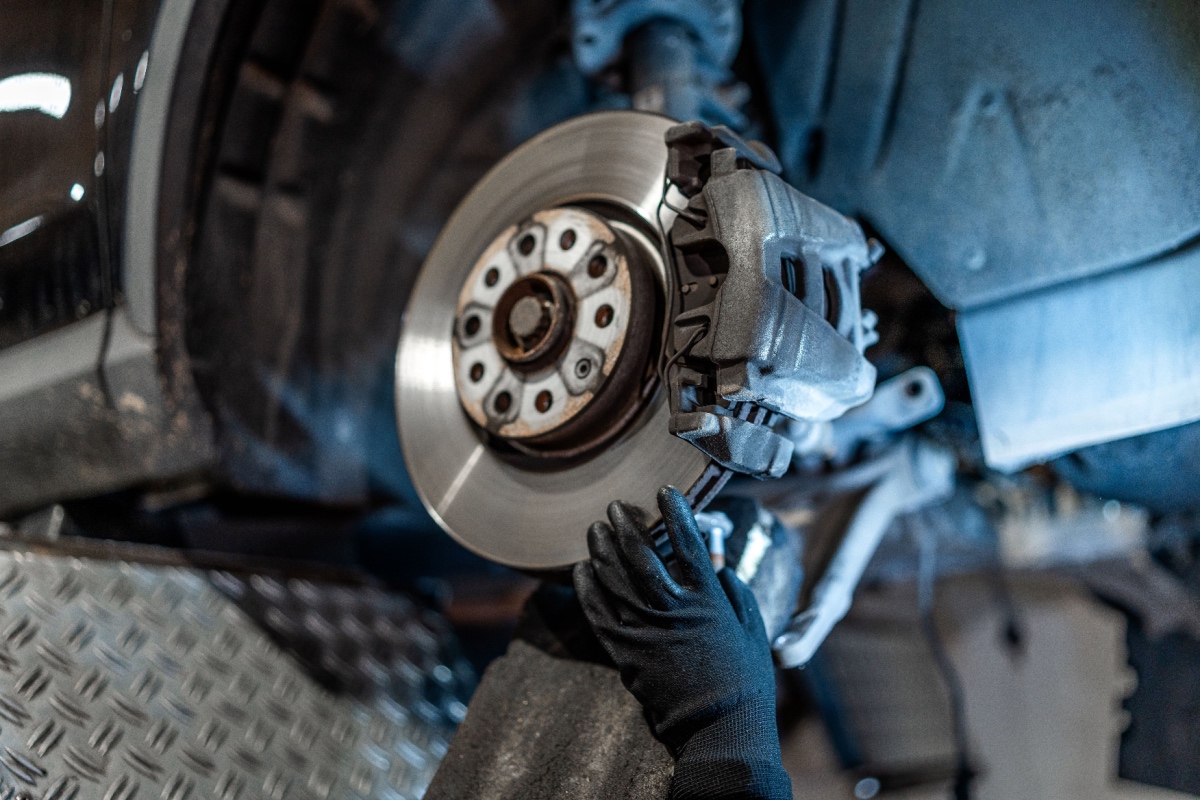
Your brakes are the single most important safety system in your vehicle. Whether you’re driving a compact car, a heavy-duty truck, or an everyday SUV, reliable brakes keep you, your passengers, and everyone else on the road safe. The problem is that brakes wear down gradually, and many drivers don’t notice the warning signs until they become serious.
Table of Contents
- Squeaking or Grinding Noises
- Vibrations or Pulsing When Braking
- A Soft or Spongy Brake Pedal
- Warning Lights on Your Dashboard
- Longer Stopping Distances
- Why Ignoring Brake Problems Is Dangerous
- How Brake Inspections Work at Acebuilt Automotive
- Staying Ahead with Preventative Maintenance
- When to Schedule Brake Service
- FAQs
1. Squeaking or Grinding Noises
Brake noises are usually the first sign that something isn’t right.
When brake pads wear down, many are designed with small metal tabs that create a squeaking noise. This squeak acts as an early alert that the pads are reaching the end of their life. At this point, the brakes are still functional, but they’re not far from needing replacement.
If the squeak turns into a grinding sound, the situation is much more urgent. Grinding usually means the pads have worn away completely, leaving the metal backing plate to press against the rotor. Driving like this can damage the rotors, which are far more expensive to replace than pads.
Noise may also come from debris stuck between the pad and rotor or from moisture, but persistent squeaking or grinding shouldn’t be ignored.
2. Vibrations or Pulsing When Braking
Another common warning sign is vibration in the steering wheel or brake pedal when slowing down.
What Causes the Vibration?
Most often, this happens because the brake rotors are uneven. Heat builds up every time you use your brakes, and over time, that heat can warp the metal surface. When a warped rotor spins, the brake pad doesn’t make smooth contact, creating a pulsing or shaking sensation.
Uneven pad wear can also contribute to vibrations. If one side of the pad wears faster than the other, the balance is thrown off and braking feels rough.
Why It Matters
Vibrations aren’t just annoying—they reduce stopping power and increase wear on the rest of the brake system. The earlier the problem is checked, the more likely rotors can be resurfaced instead of replaced entirely.
3. A Soft or Spongy Brake Pedal
The way your brake pedal feels underfoot tells you a lot about the condition of the system.
When brakes are in good shape, the pedal should feel firm and responsive. If it sinks too close to the floor or feels soft and spongy, something is wrong.
Common Causes of a Spongy Pedal
- Air in the brake lines, which interrupts hydraulic pressure
- Low or leaking brake fluid
- A failing master cylinder
Each of these conditions is serious. Without proper hydraulic pressure, your vehicle can’t generate enough force to stop effectively. This isn’t an issue to monitor over time—it requires immediate service to avoid a complete loss of braking power.
4. Warning Lights on Your Dashboard
Modern vehicles are equipped with advanced sensors to monitor brake performance. If your brake warning light comes on, it’s important to take it seriously.
This light can mean different things depending on your vehicle. In some cases, it signals low brake fluid. In others, it’s a direct alert that the pads are worn down or that there’s an issue with the anti-lock braking system (ABS).
Even if your brakes feel normal, don’t ignore dashboard warnings. They’re designed to catch issues before they become obvious during driving. A quick inspection can confirm the cause and give you peace of mind.
5. Longer Stopping Distances
One of the clearest signs that your brakes are struggling is when it takes more time or distance to stop your vehicle.
This can happen for a few reasons: worn pads, overheated components, or low fluid pressure. In every case, it means your brakes aren’t working as efficiently as they should. On the road, even a small increase in stopping distance can make the difference between avoiding an accident and getting into one.
If you feel like you need to press harder on the pedal or give yourself more room to stop, it’s time to have your system inspected.
Why Ignoring Brake Problems Is Dangerous
Delaying brake repairs is more than just an inconvenience—it’s a safety hazard. Ignoring squeaks, vibrations, or warning lights doesn’t make them go away. Instead, the problem spreads to other parts of the braking system, making the repair more expensive in the long run.
For example, waiting too long to replace brake pads often leads to damaged rotors, and ignoring fluid leaks can harm the master cylinder. Addressing issues early keeps repair costs lower and, more importantly, keeps your vehicle safe to drive.
How Brake Inspections Work at Acebuilt Automotive
A professional brake inspection goes far beyond a quick glance. When you bring your vehicle in, our team checks:
- Brake pad thickness and wear pattern
- Rotor condition, including any signs of warping or scoring
- Calipers and hardware for proper movement
- Brake fluid level and quality
- Hydraulic system components like the master cylinder and lines
This process ensures the entire system is evaluated, not just one part. That way, we can identify issues before they affect your safety.
Staying Ahead with Preventative Maintenance
You don’t have to wait until symptoms appear to care for your brakes. Preventative maintenance is the key to keeping your system reliable.
Brake pads generally last between 30,000 and 70,000 miles, depending on driving habits and conditions. If you spend time in stop-and-go traffic, haul heavy loads, or drive in hilly areas, your brakes may wear faster.
Scheduling brake checks with your oil changes or at least once a year is a smart way to catch small issues before they turn into larger repairs.
When to Schedule Brake Service
Any time your brakes feel, sound, or perform differently, it’s worth scheduling service. You don’t need to wait until every warning sign appears. Catching one issue early often prevents the rest from following.
At Acebuilt Automotive, we use precision tools and quality parts to repair brake systems the right way. Whether you need pads, rotors, fluid, or more advanced hydraulic work, our team can restore confidence every time you step on the pedal.
Keep Your Brakes Reliable with Acebuilt Automotive
Your brakes are too important to ignore. Squeaks, vibrations, spongy pedals, warning lights, or longer stopping distances are all clear signs that it’s time for service. Acting early keeps you safe and prevents small problems from becoming bigger ones.
At Acebuilt Automotive, we handle brake repairs with precision and care. Whether it’s routine pad replacement or a full inspection of the hydraulic system, our team is ready to keep your vehicle performing the way it should. Schedule your brake inspection today and drive with confidence knowing your vehicle is in good hands.
FAQs
1. How long should brake pads last?
Brake pads typically last 30,000 to 70,000 miles, but the lifespan depends on your driving habits, vehicle weight, and road conditions.
2. Why are my brakes squealing when I first start driving?
Moisture, condensation, or surface rust can cause temporary squeaks. If the sound doesn’t go away after a short drive, it may be worn pads.
3. Can worn brakes damage other parts of my vehicle?
Yes. Driving on worn pads can damage rotors and calipers, which makes repairs more costly.
4. How do I know if my brake fluid needs to be replaced?
Brake fluid should be clear or light amber. If it looks dark or dirty, it’s time to have it replaced.
5. How long does brake service usually take?
Basic pad replacement can often be completed in a few hours. More complex repairs involving rotors or hydraulics may take longer, but we always provide clear timelines.