
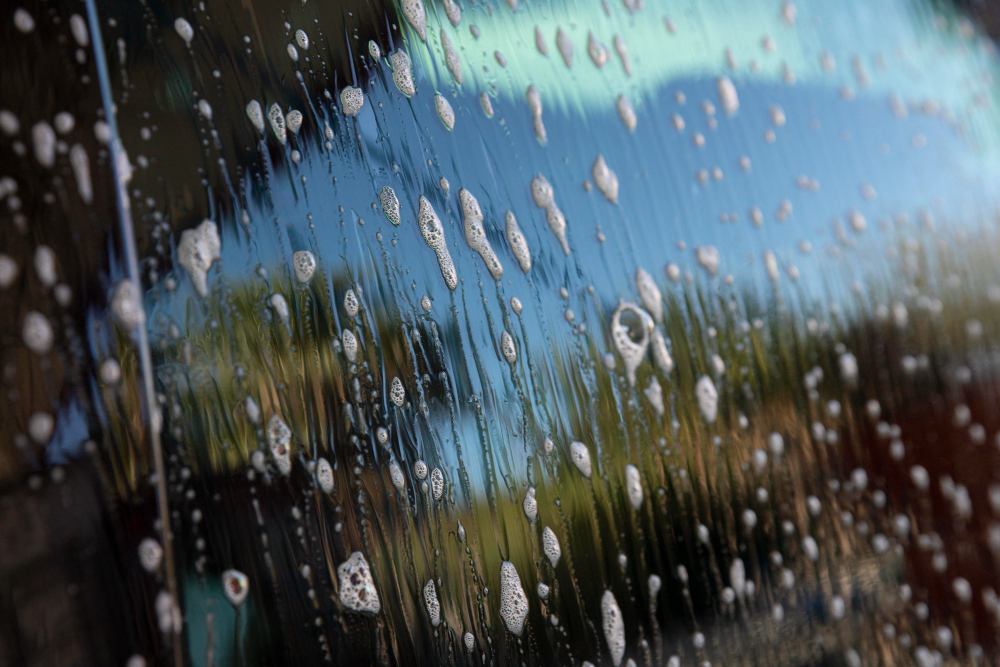
Window tint bubbles or peels for one of four main reasons: moisture that has not finished drying after installation, dirt trapped under the film, adhesive that has broken down from heat and age, or damage to the film’s edges. The first one is normal and goes away on its own. The others usually mean the film is failing.
The kind you have tells you whether to wait it out or plan for new film. Here is what each type of bubble looks like and what to do about it.
Bubbles in new tint are often normal
Most automotive tint goes on with a water-based solution that lets the installer position the film before squeegeeing it flat. A small amount of that moisture stays behind and has to evaporate through the film. Until it does, you may see small water pockets or a light haze.
XPEL says haze or moisture bubbles can show for up to ten days after installation and clear once the moisture dries. Gila notes that full curing takes about a week to 10 days, with dry, sunny weather speeding it up and cold, wet weather slowing it down. In Las Vegas, most of the year falls on the faster side.
During this period, keep the windows rolled up for as long as your installer advises, usually a few days. A window rolled down too early lets the glass drag the edge of the film against the door seal before the adhesive has bonded, which is a common cause of early peeling.
Water bubbles vs. air bubbles
The two look similar at first, but they behave differently.
- Water bubbles are soft, slightly cloudy pockets that shrink a little each day and disappear as the film cures.
- Air bubbles are clear, sharp-edged pockets that stay the same size. They form when the film was not fully squeegeed during installation, and they will not go away on their own.
If a bubble has not changed after two weeks, or it has a speck of something in the middle, it is not curing moisture.
Causes of bubbling after the cure period
Dust and debris trapped during installation
A single grain of dust, a hair or a fiber from a towel under the film holds it off the glass and creates a small raised bubble, often with a visible dot at the center. Las Vegas dust makes clean installs harder, which is why glass prep and a clean installation bay matter as much as the film itself. These bubbles do not cure out.
Adhesive breakdown from heat and UV
Every tint film relies on an adhesive layer, and years of direct sun and high cabin temperatures wear it down. When the adhesive weakens, the film starts separating from the glass in patches. This often shows up first on the rear window, which gets long hours of sun and can heat up more than the side glass. Lower-grade dyed films tend to fail this way sooner, and they often turn purple at the same time as the dye fades. Our comparison of ceramic tint vs regular tint explains why ceramic films hold up longer in desert heat.
Low-quality film
Budget films can use thinner materials and weaker adhesives. They may look fine on day one and start bubbling or lifting at the edges within a year or two. Price alone does not guarantee quality, but very cheap tint jobs often cut corners on the film.
Poor edge work
The edges are where peeling usually starts. If the film is trimmed unevenly, stops short of the glass edge or overlaps a seal, the edge has nothing solid to hold onto. Dirt and moisture then work their way underneath, and the lift grows a little at a time.
Causes of peeling you can control
Some tint damage comes from daily use rather than the film or the install.
- Windows rolled down before the film has cured
- Abrasive pads, rough paper towels or a razor used near the edges
- Cleaners the film maker warns against. XPEL, for example, recommends a microfiber towel with water or a mild non-ammonia glass cleaner.
- Seatbelt buckles, rings, keys or cargo that catch the film
- A small lifted corner that gets picked at, which pulls more film away
A lifted corner is easier to address early. Left alone, it collects dust and widens each time the window moves.
Can bubbling tint be fixed?
Water bubbles in new tint usually need nothing but time. A few small air pockets spotted in the first days after installation can sometimes be worked out by the installer. Once film has bubbled from age or adhesive failure, though, it cannot be reliably fixed. A pin hole or firm pressure may hide a bubble briefly, but the adhesive underneath is no longer holding.
The lasting fix is to remove the old film and install new tint. Removal takes care, especially on the rear window, where the defroster lines sit on the inside of the glass and can be damaged by scraping. A shop that does removal regularly will strip the film and clean off the leftover adhesive before new tint goes on.
How to replace old tint the right way
Replacement is a good time to upgrade the film. Ceramic and carbon films do not rely on dye for their color, so they resist turning purple, and ceramic film rejects more heat, which matters on a car that sits in a Las Vegas parking lot. Ace Built Automotive offers dyed, carbon and ceramic film as part of its window tint in Las Vegas service, with removal of old film when needed.
Replacement is also the time to check the shade. If you bought a used car, the old tint may be darker than Nevada allows on the front side windows. Our guide to Nevada tint laws covers the legal limits for each window.
Frequently asked questions
How long do bubbles last after tint is installed?
Water bubbles and haze usually clear within about a week to 10 days, sometimes sooner in hot, dry weather. Bubbles that have not changed after two weeks are likely air or debris and should be checked by the installer.
Why is my tint bubbling after several years?
Long-term heat and UV exposure weaken the adhesive that holds the film to the glass. Once that happens, the film separates in patches, and lower-grade dyed films often turn purple at the same time.
Is it safe to drive with bubbling tint?
Large bubbles can distort your view, especially on the rear window at night. If the bubbling affects what you can see while driving, have the film removed or replaced.
Can I pop tint bubbles with a pin?
It is not recommended. A pin may flatten a bubble briefly, but it does not restore the adhesive, and the hole can let dirt and moisture in.
How long should I wait to roll my windows down after tinting?
Most installers recommend a few days, depending on the film and the weather. Follow the timeline your installer gives you at pickup.
Conclusion
A little haze or a few water pockets in new tint is part of the curing process and clears up on its own. Bubbles that stay, edges that lift and film that turns purple point to trapped debris, weak edge work or adhesive that has worn out, and those problems call for new film rather than a quick patch.
Ace Built Automotive removes failed tint and installs new film at our Las Vegas shop on Decatur Blvd. If your windows are bubbling or peeling, call 702.476.9191 or request a free quote.