
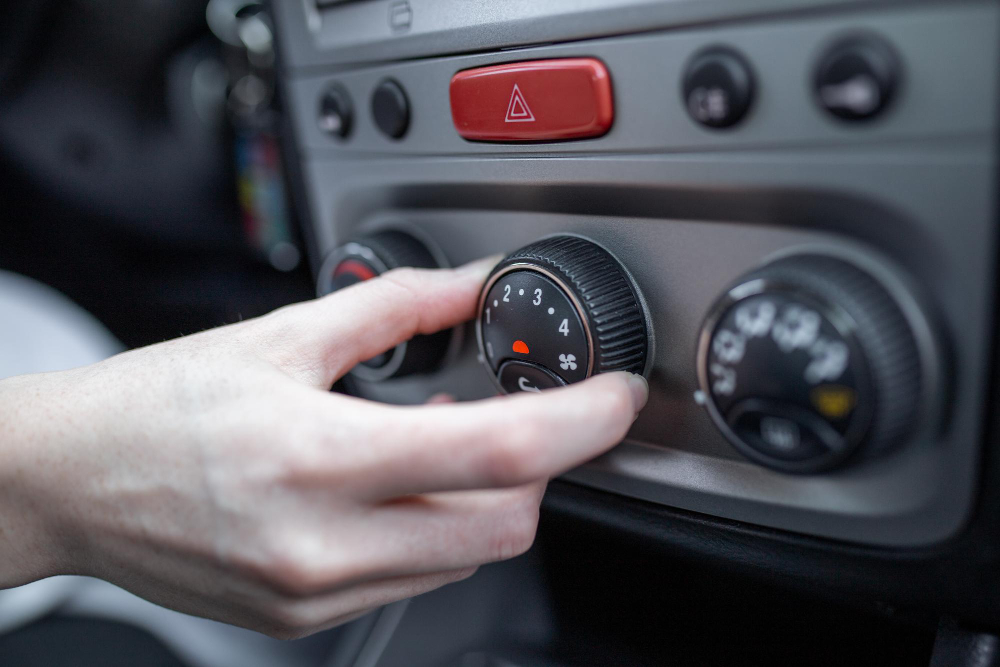
Your air conditioning worked fine in April. Now it is August, the pavement on Decatur is throwing heat back at the car, and the vents are pushing air that feels lukewarm before you reach the 215.
Most Las Vegas AC complaints are not sudden failures. The system was already weak, and desert heat exposed it. A system that felt cold in spring gives up in summer for reasons worth knowing before you pay to fix it.
A trusted Las Vegas Auto Shop can inspect the AC system, identify the underlying problem, and determine whether you need a recharge, component repair, or a more extensive service before the summer heat makes the issue worse.
Your AC does not make cold air, it removes heat
This one idea explains most of what follows. An automotive air conditioner is a heat pump. It absorbs heat from the cabin at the evaporator, carries that heat in refrigerant to the condenser at the front of the vehicle, and releases it into the outside air.
That final step depends on outside air being cooler than the refrigerant. At 75 degrees the condenser sheds heat easily. At 112 degrees the gap narrows, pressure inside the system climbs, and the same parts work much harder for less cooling.
A system in perfect condition still loses some capacity on the hottest afternoons, and a system with a small fault loses enough to feel broken.
Heat strains more than the AC, and our guide to vehicle upgrades for Las Vegas heat covers the rest of the system.
Low refrigerant always means a leak
Refrigerant is not consumed. It circulates in a sealed loop. A system low on charge lost it somewhere, usually through a seal, a hose, or the condenser.
Desert conditions speed that up. Heat and UV harden rubber, and a vehicle parked outside in Las Vegas ages those parts faster than one in a mild climate. Slow leaks often pass unnoticed for a full season, since the system keeps cooling until the charge drops far enough to matter.
A proper repair locates the leak with dye or an electronic detector, corrects the source, then evacuates the system and recharges it to the exact weight the manufacturer specifies. Many vehicles built in the last several years use R-1234yf refrigerant instead of the older R-134a, and the two are not interchangeable.
The can from the parts store usually makes it worse
Recharge cans are tempting in July. They create three problems.
An overcharge is the most common. Too much refrigerant raises high-side pressure and cuts cooling, so the car often blows warmer after the can than it did before. Many cans also carry stop-leak sealant, which can contaminate the system and the recovery equipment a shop uses, turning a small repair into an expensive one. The gauge on the can reads low-side pressure only, and that reading alone cannot tell you whether the charge is correct on a 110-degree day.
Charge gets measured by weight for a reason.
Weak airflow can look exactly like weak AC
Sometimes the refrigerant side is healthy and the air is not moving.
A clogged cabin air filter restricts volume across the evaporator, so the air reaching you is cold but thin. Las Vegas dust loads those filters faster than most maintenance schedules assume. A failing blower motor or resistor shows up as air on some fan speeds and nothing on others. A stuck blend door actuator mixes heated air into the vents, often on one side of the car only, and it usually clicks behind the dash.
None of these needs refrigerant work, and all of them get misdiagnosed as AC failures regularly.
What you can do before the appointment
- Drop the windows for the first minute to push the hottest air out, then close them and switch to recirculation, since cooling already-cooled air takes less work.
- Park in shade or use a sunshade so the system starts from a lower cabin temperature.
- Rinse the condenser gently from the front with a garden hose. Skip the pressure washer, which bends fins flat.
- Replace the cabin air filter on schedule, or sooner during dusty months.
- Note when the problem appears: at idle or at speed, one side or both, right away or after twenty minutes.
Less heat entering the cabin helps too. Quality window tint Las Vegas cuts the solar load before it ever reaches the vents, so the system starts from a cooler cabin.
When it needs a shop
Warm air at idle, a clicking or grinding noise when the AC engages, oily residue near a fitting, or cooling that fades after twenty minutes all point to something a gauge set needs to read.
Our auto repair shop Las Vegas team reads pressures on both sides of the system and takes a vent temperature before recommending anything.
Frequently asked questions
Why does my AC blow cold while driving but warm at idle?
Airflow through the condenser drops to whatever the cooling fan provides once the car stops moving. A weak or dead fan, a blocked condenser, or a low refrigerant charge each produce that exact pattern. It is one of the most useful clues you can give a technician.
Is it normal for AC to feel weaker on a 110 degree day?
Some capacity loss is expected, because the condenser has less temperature difference to work with. The vents should still deliver air noticeably colder than the outside air. Air close to ambient means something needs attention.
How often should car AC be recharged?
There is no recharge interval. A sealed system holds its charge for the life of the vehicle unless it leaks. A shop that recommends an annual top-off without finding a leak is treating a symptom.
Can I just use a recharge can from the auto parts store?
It carries real risk. An overcharge reduces cooling, and sealant additives can contaminate the system. The can also does nothing about the leak itself. If the system is empty enough to need a can, it has a leak that a can will not fix.
What does AC repair cost?
The cause drives the price and the range is wide. A cabin air filter sits at one end and a compressor replacement at the other, which is why diagnosis comes before a number.
Conclusion
Air conditioning is closer to safety equipment than comfort equipment in a Las Vegas summer. Most systems that fail in August were already leaking or already short on airflow back in spring. A check before the worst heat arrives is far cheaper than a compressor in the middle of it.
Ace Built Automotive is at 5390 S. Decatur Blvd, Suite 3, just off the 215 Beltway. Hours are Monday through Friday 8:00 AM to 5:00 PM and Saturday 8:00 AM to noon. Call 702.476.9191 or request a free quote and we will tell you what the system is actually doing.